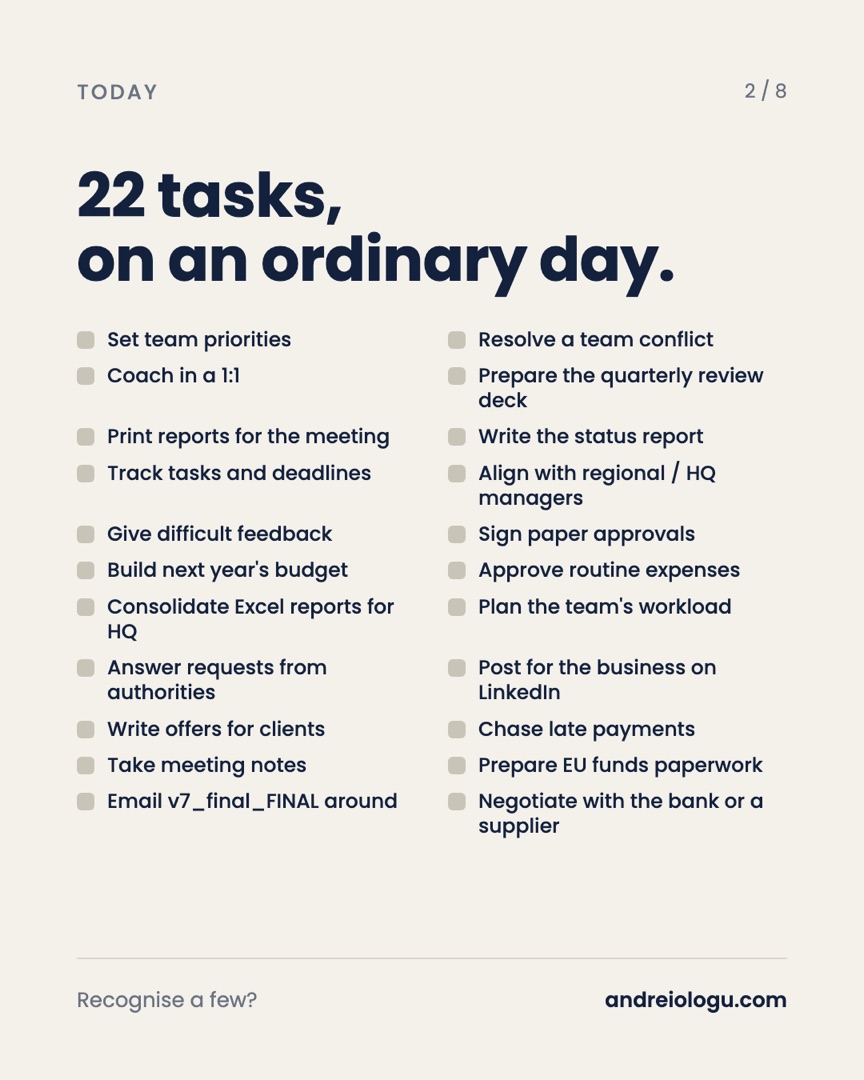
Today: 22 tasks
An ordinary manager's day, in the order of Diana's slide:
- set team priorities;
- resolve a team conflict;
- coach in a 1:1;
- prepare the quarterly business review deck;
- print reports for the management meeting;
- write the status report;
- track tasks and deadlines;
- align with regional or HQ managers;
- give difficult feedback;
- sign paper approvals;
- build next year's budget;
- approve routine expenses;
- consolidate Excel reports for HQ;
- plan the team's workload;
- answer requests from the authorities (tax office, labour inspectorate);
- post for the business on LinkedIn and Facebook;
- write offers for clients;
- chase late payments;
- take meeting notes;
- prepare EU funds paperwork;
- email file versions back and forth (v7_final_FINAL);
- negotiate with the bank or a key supplier.
We recognise most of them. Some of them with a smile.
2030: same manager, different team
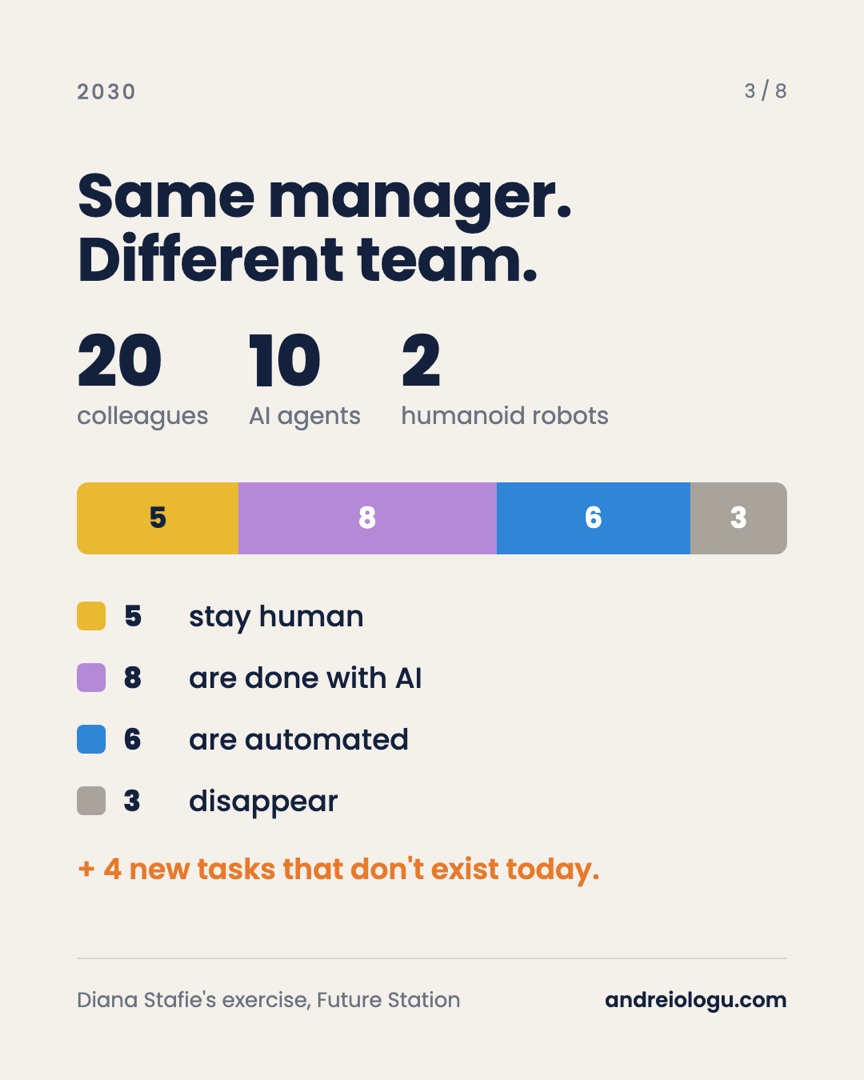
Then Diana moved the same manager to 2030. The team: 20 colleagues, 10 AI agents and 2 humanoid robots. The exercise was inspired by the scenarios for the economy published by Anthropic.
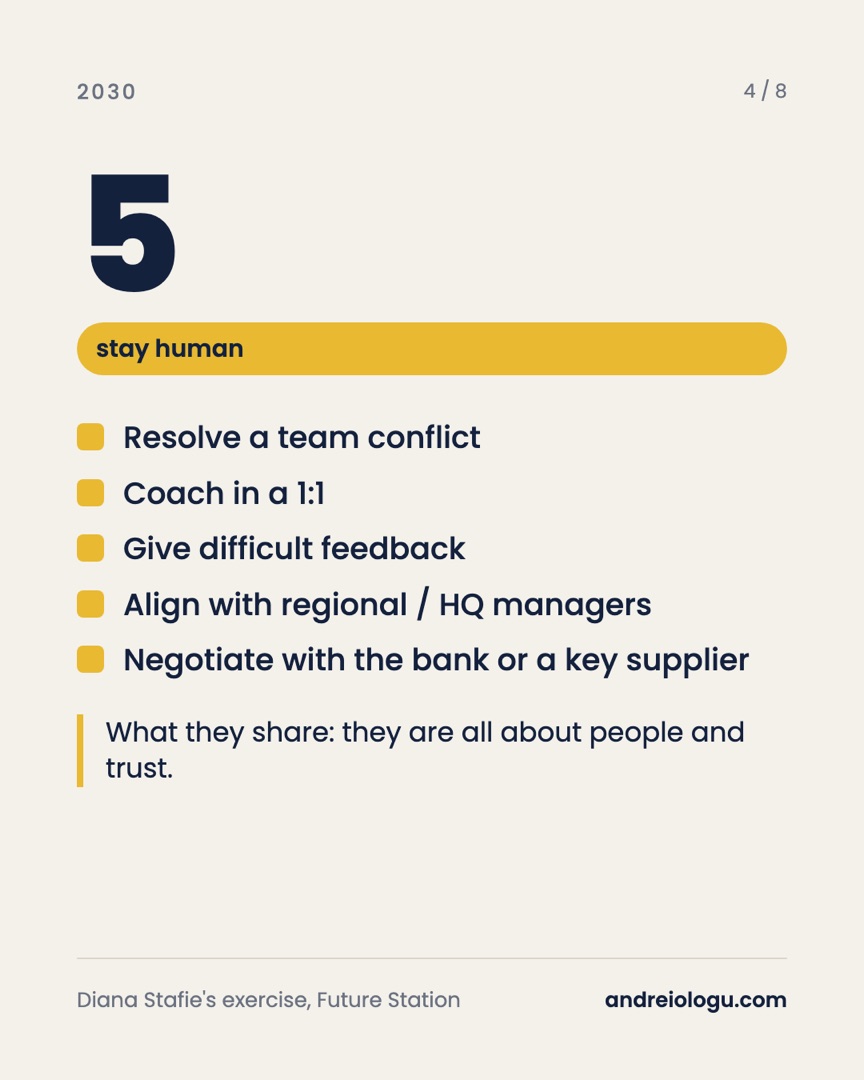
5 stay human
- resolve a team conflict;
- coach in a 1:1;
- give difficult feedback;
- align with regional or HQ managers;
- negotiate with the bank or a key supplier.
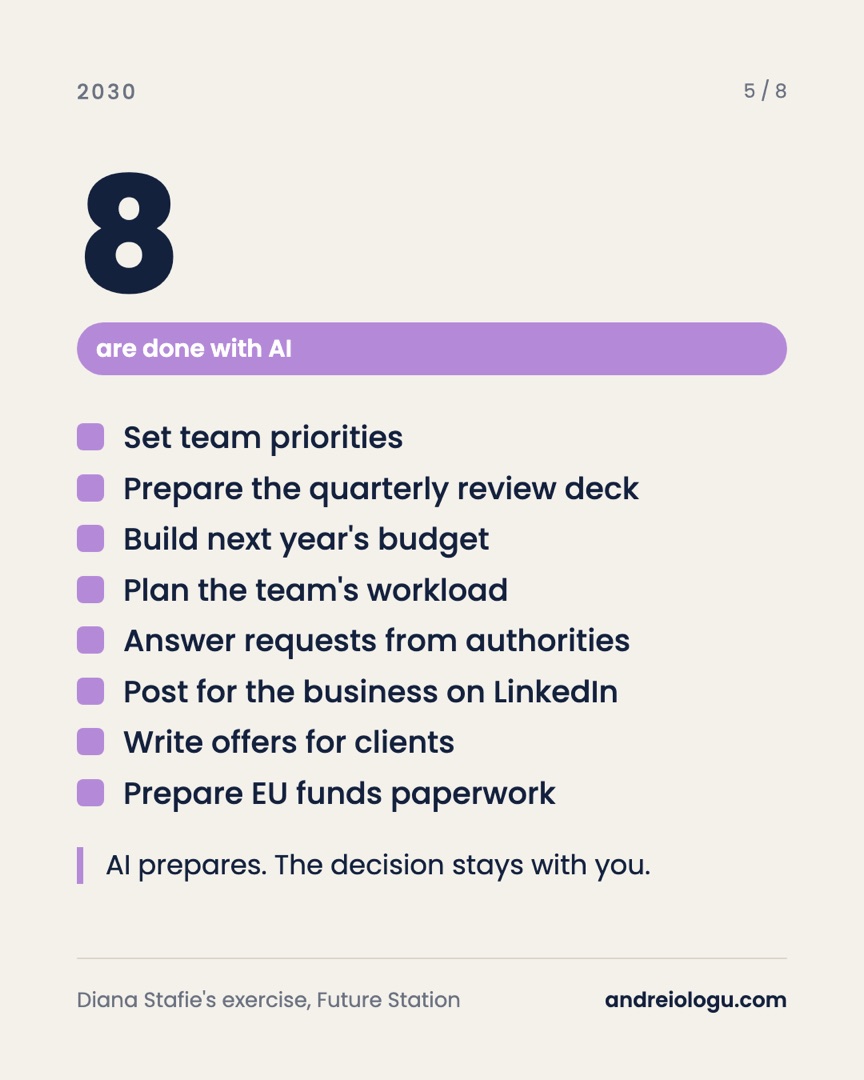
8 are done with AI
Priorities, the quarterly review, the budget, workload planning, answers to the authorities, posts for the business, client offers and funding paperwork. AI prepares, the decision stays with the person.
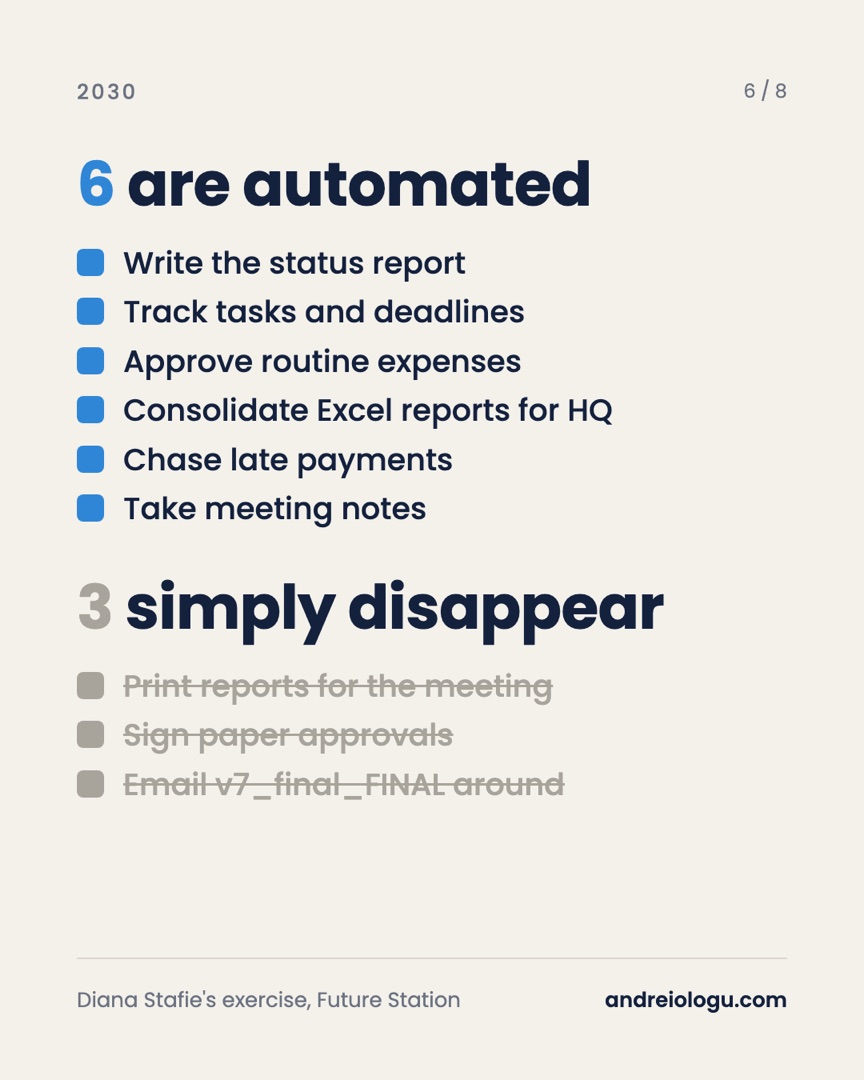
6 are automated
The status report, tracking tasks and deadlines, approving routine expenses, consolidating Excel reports, chasing late payments and taking meeting notes.
3 simply disappear
Printed reports for the meeting, paper approvals, and v7_final_FINAL sent by email.
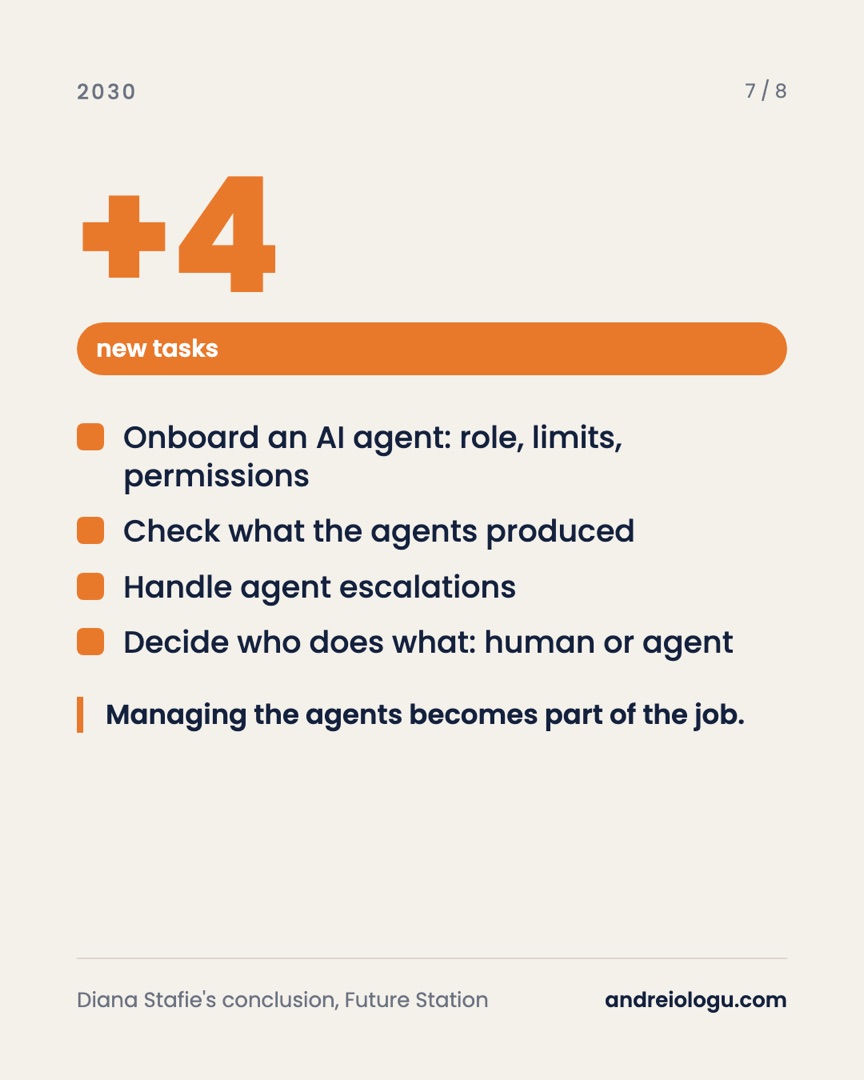
And 4 new ones appear
- onboard an AI agent: role, limits, permissions;
- check what the agents produced;
- handle agent escalations;
- decide who does what: human or agent.
The conclusion on Diana's slide: managing the agents becomes part of the job.
What I take away
What I liked most is that the exercise doesn't talk about "AI is taking our jobs". It talks about tasks. And when you look at tasks, the picture is much less dramatic and much more useful.
The five that stay human have one thing in common: they are all about people and trust. Conflict, coaching, feedback, alignment, negotiation. No reporting or tracking task stays on that list.
As a BA, I break work into smaller pieces every day: processes into steps, requirements into stories, stories into criteria. Diana's exercise does the same with a whole job. And anyone can do it for their own day, in 15 minutes.
The rest of the day at IQ Digital Summit is in my long note about the summit.
Which tasks in your day do you think will stay human in 2030?